
Guide
How do I choose an industrial floor coating contractor?
Industrial floor coating in Dallas Fort Worth runs $4 to $14 per square foot installed, depending on traffic load and chemical exposure. Slabbr installs commercial polyaspartic systems at $4 to $12, warehouse systems at $4 to $9, and kitchen-grade urethane at $8 to $14, phased nights and weekends so facilities stay open.
Spec by traffic load, not looks
Traffic load decides the system, not color charts. A floor that sees forklifts 8 hours a day needs a different build than one that sees foot traffic. Forklift-rated systems in the $4 to $9 range use high-build polyaspartic bodies and wear coats sized for point loads and pivot wear. Start every spec conversation with what rolls across the slab, how heavy it is, and how often it turns.
Chemical exposure and heat come next. Battery acid at charging stations, hydraulic fluid at dock doors, and hot water washdowns each rule out certain topcoats. A thin epoxy that would survive a showroom fails in months under thermal shock. Name the chemicals in your building during the walkthrough. The system chemistry should answer them line by line.
System bands and pricing by use case
Slabbr's commercial systems run $4 to $14 per square foot by use case. Standard commercial coatings run $4 to $12, with volume pricing once the job passes 2,000 square feet. Warehouse and industrial systems run $4 to $9, rated for forklift traffic, with line striping and safety zones built into the quote rather than sold as extras.
Specialty environments cost more because the chemistry costs more. Auto shop systems run $6 to $10 and handle oil, brake fluid, and hot tires. Hangar systems run $5 to $9 and resist fuel spills. Commercial kitchens need urethane cement or quartz at $8 to $14 with integral coving. Each band exists because the exposure is different, not because the look is.
Downtime phasing: nights, weekends, zone by zone
Slabbr phases commercial installs by zone so the business never closes. Crews coat one section at night or over a weekend, cordon it while it cures, and open it before starting the next. Racking, staging lanes, and dock doors stay in service in every zone that is not actively being ground or coated.
Phasing needs a real schedule, not a promise. Ask for a zone map with dates, cure times per product, and return-to-service hours for foot traffic versus forklifts. Slabbr's polyaspartic systems can return a zone to service overnight. Epoxy systems from other bidders can need days. The schedule should state the return time for every zone.
What a real industrial quote itemizes
A real quote names the prep method first. It should say diamond grinding, describe the profile the grind will leave, and price removal of any failed coating as its own line. Slabbr grinds every floor and never acid etches. A quote that says surface prep included without naming the method is hiding the corner it plans to cut.
The rest reads like a spec sheet. Product names and manufacturers. Total system thickness in mils. Joint treatment, filled or honored. Moisture testing, with a mitigation price if readings come back high. Line striping, safety zones, and coving where required. Mobilization count, since night and phased work costs more to run. Each line should carry its own number.
Mistakes that close facilities
Wrong cure windows shut buildings down. A contractor who opens a zone to forklifts before the coating reaches mechanical cure leaves tire tracks in the finish, and the fix means grinding that zone off and starting over. Cure time depends on product and slab temperature. Get return-to-service times in writing per zone before work starts.
Coating over moving joints fails every time. Control joints exist because concrete moves, and a coating bridged across them cracks along the same line within a season. Joints get honored or filled with flexible joint filler, never skimmed over. The same rule covers failed coatings. New material bonds to whatever sits under it, so a failing layer takes the new floor down with it.
How to vet an industrial floor contractor
Ask what machine grinds the floor. A contractor who owns planetary grinders and vacuum dust extraction does industrial work. One who talks about acid etching does driveways. Ask for 3 references with similar traffic, in service 2 years or more, and call them. Ask what share of the company's work is commercial rather than residential.
Get the warranty in writing and read what voids it. Slabbr warranties commercial installs for 2 years. Be suspicious of anyone who quotes over the phone without moisture testing, or who agrees to coat over an existing failed coating to save money. A contractor willing to skip removal is pricing a floor that fails.
The services behind this guide
Get the floor, not just the reading
Related questions
- How much does it cost to coat a 2-car garage floor?
- Do you grind the floor or acid etch it?
- What is hot tire pickup?
- Why is my epoxy garage floor turning yellow?
What we guarantee, in writing: the warranty. How install day runs: our process. The standards we prep to: ASTM and ICRI.
Straight answers, real numbers
From the blog
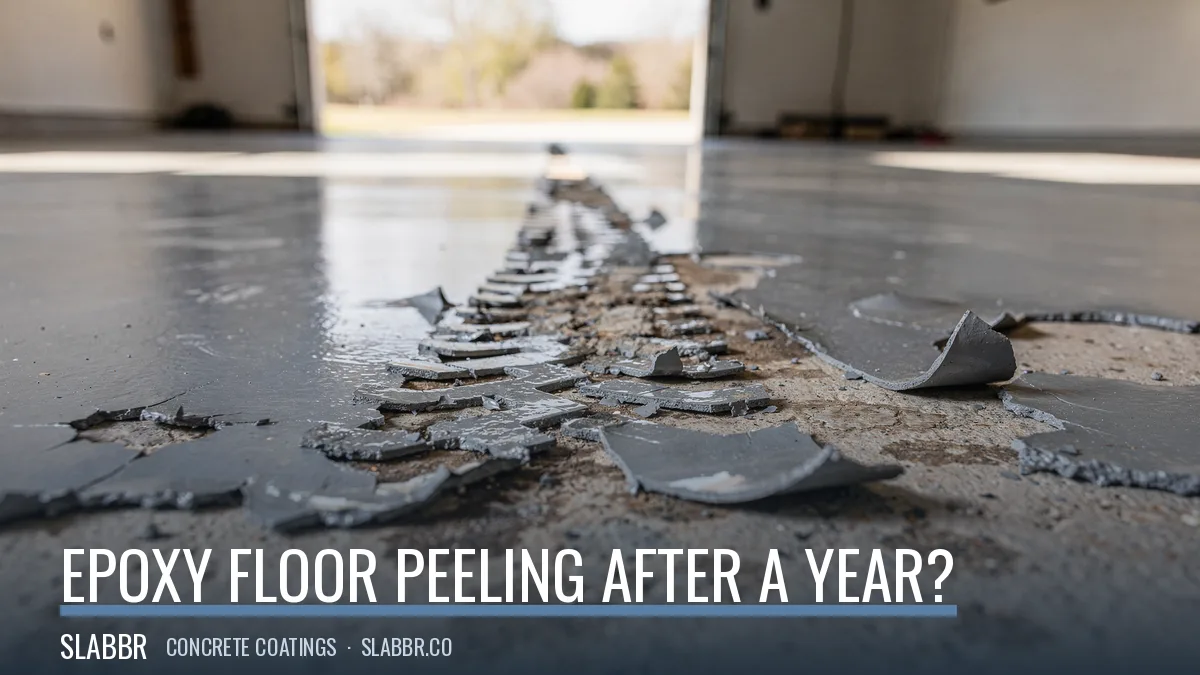
Aug 25, 2026
Epoxy Floor Peeling After a Year: Whose Fault It Is and What Your Options Are
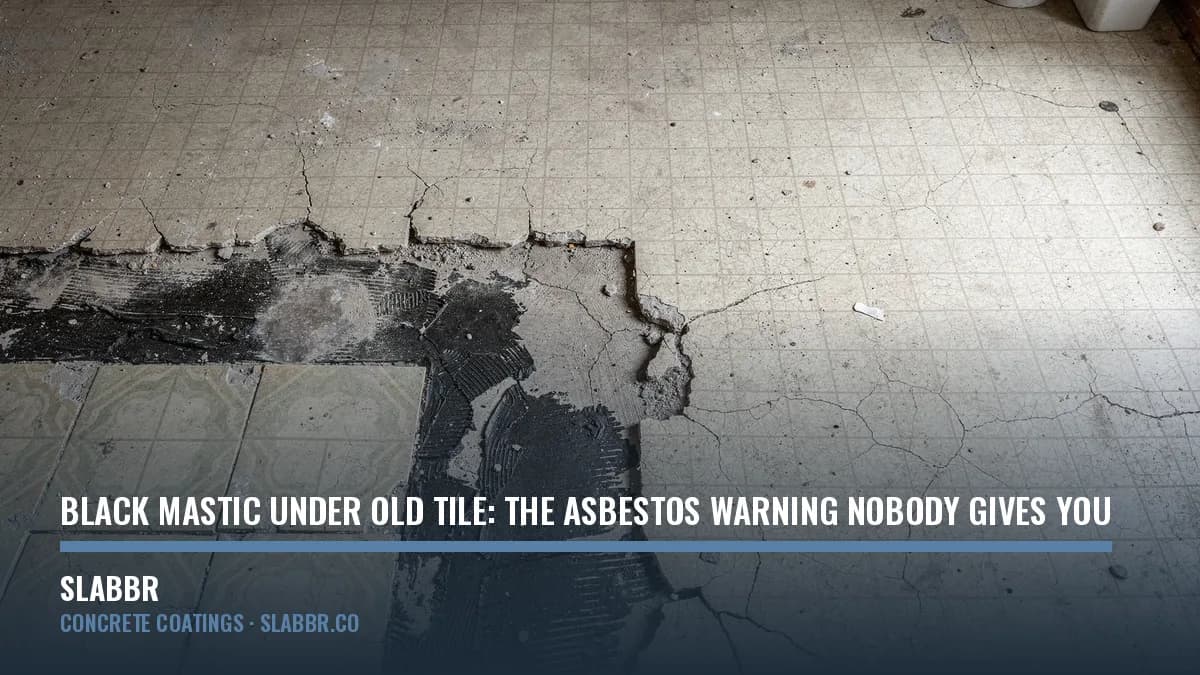
Sep 11, 2026
Black Mastic Under Old Tile: The Asbestos Warning Nobody Gives You
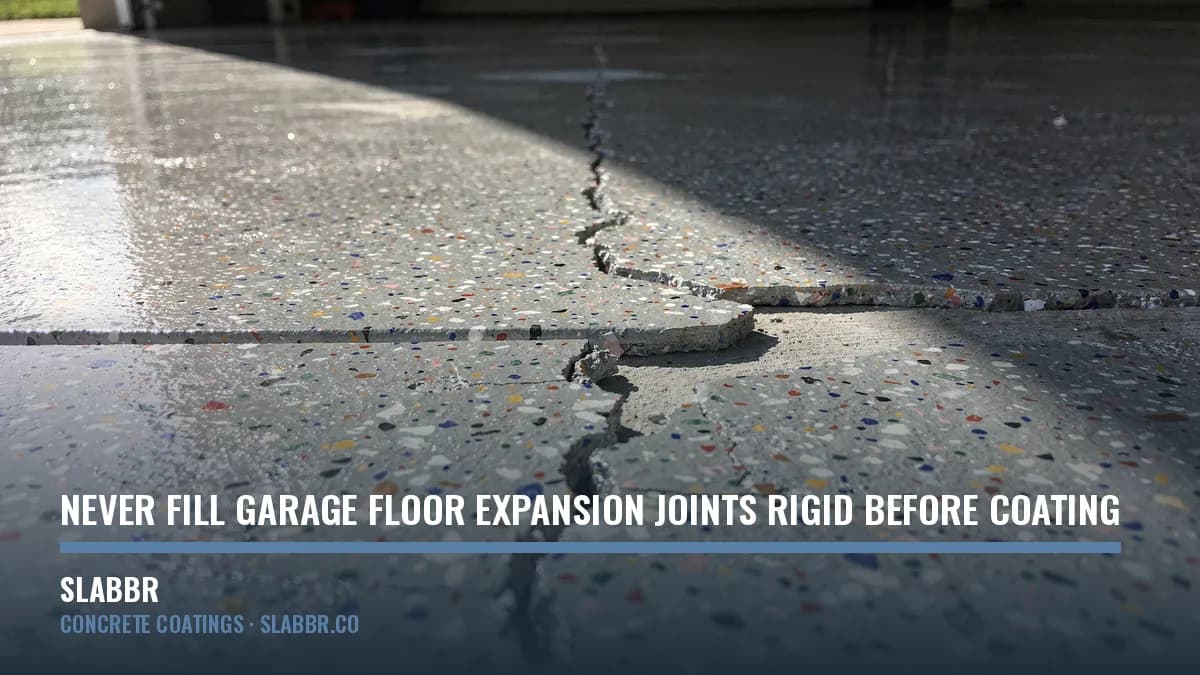
Sep 10, 2026
Never Fill Garage Floor Expansion Joints Rigid Before Coating
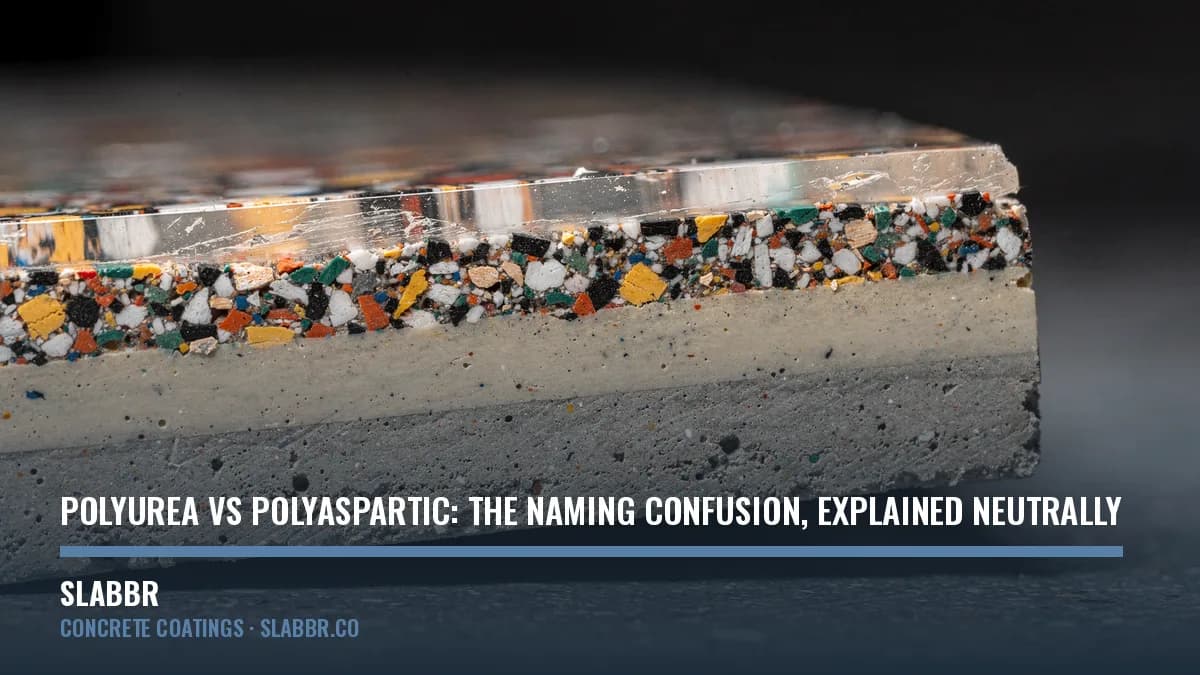
Sep 9, 2026
Polyurea vs Polyaspartic: The Naming Confusion, Explained Neutrally
See your number in about a minute
Pick what we are coating, pick the size, get a price. No home visit needed to see it and no salesperson attached to it.